Best Fertilizers to Boost Lawn Growth
An evidence-informed guide to choosing fertilizers that help lawns thicken, green up, and develop stronger roots.
Introduction
Feeding a lawn sounds simple, but choosing the right fertilizer and applying it correctly are the keys to seeing real, lasting improvement. This guide explains the main fertilizer types, how to match them to your lawn’s needs, and practical application tips you can follow this season. If you want a professional option, learn more about professional Lawn Fertilization.
1. Understand lawn nutrient needs
Lawns primarily need three macronutrients: nitrogen (N), phosphorus (P), and potassium (K). Nitrogen fuels leafy growth and deep green color; phosphorus promotes root development and establishment; potassium supports stress tolerance. A balanced program considers all three plus secondary nutrients and micronutrients if a soil test shows deficiencies.
2. Types of fertilizer you’ll encounter
Granular slow-release fertilizers
Slow-release granular fertilizers release nutrients over weeks to months, giving steady growth without dramatic spikes. These are great for home lawns because they reduce the risk of burning and need fewer applications. Look for products labeled "controlled release" or "slow release" and check the guaranteed analysis for a high percentage of slow-release nitrogen.
Water-soluble (liquid) fertilizers
Liquids deliver nutrients quickly and are useful for a fast green-up before an event or when symptoms need rapid correction. They’re often used in spring or when recovering from stress. Because their effect is temporary, they’re best paired with a slow-release program for long-term health.
Organic fertilizers
Organics—such as composted manures, blood meal, bone meal, or commercial organic blends—improve soil biology while supplying nutrients. They release nutrients more slowly and improve soil structure and microbial activity, making them an excellent long-term choice. Expect slower visible results but better soil health over time.
3. Choosing the right N-P-K ratio
Match the N-P-K ratio to your lawn goals. For established lawns seeking greener blades and density, a fertilizer with a higher nitrogen ratio (for example 20-5-10) is common. For new sod or seeded areas that need root development, a higher phosphorus component (like 10-20-10) can be helpful — but note many regions restrict phosphorus use unless a soil test shows deficiency. Always test soil before adding phosphorus.
4. When to apply
Timing depends on grass type. Cool-season grasses (fescue, ryegrass, Kentucky bluegrass) benefit from feeding in early spring and again in early fall. Warm-season grasses (zoysia, bermuda, centipede, St. Augustine) respond best to late spring through summer applications. Avoid heavy feeding late in fall when turf is entering dormancy.
5. Application rates & techniques
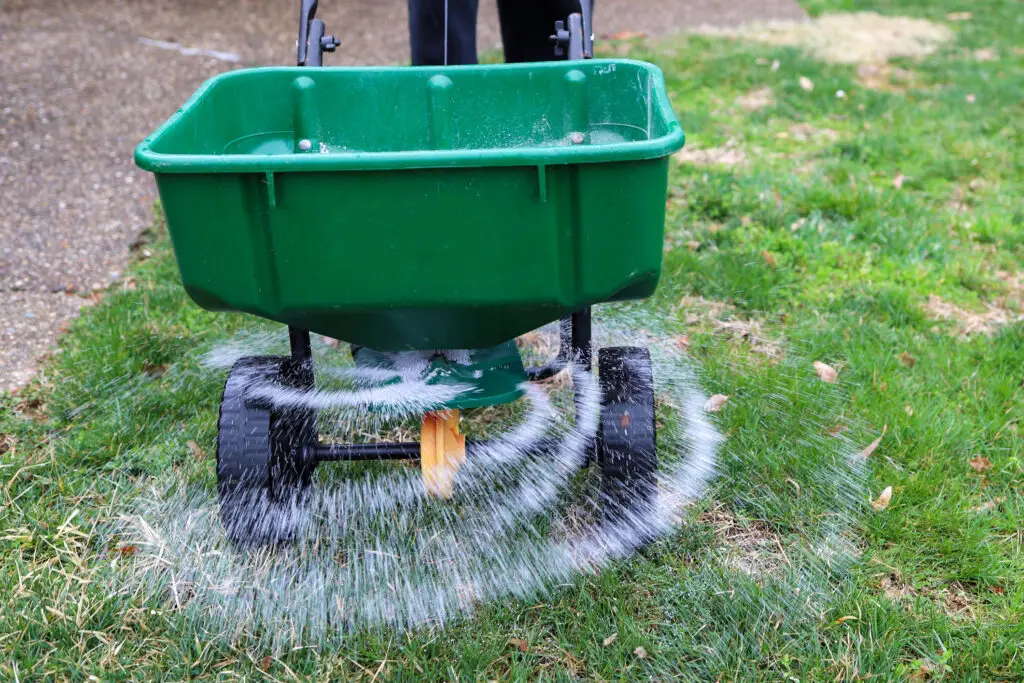
Follow label directions. Apply measured amounts using a broadcast spreader for even coverage, and overlap passes slightly to avoid strips. For granular products, irrigate lightly after application if the label recommends it. For liquids, calibrate your sprayer and treat only the area specified.
6. Specialty fertilizers and additives
Look for products tailored to your needs: iron-rich formulas for rapid greening, micronutrient blends for corrected deficiencies, or turf-specific mixes for shade or drought tolerance. Some products combine slow-release nitrogen with micronutrients for a single-step maintenance feed.
7. Soil testing — the smartest first step
Before a new feeding program, perform a soil test. Most extension services offer inexpensive testing that reveals nutrient levels and pH. Results let you correct specific problems (for example lime to raise pH or sulfur to lower it) and avoid unnecessary fertilizer use. A precise plan saves money and reduces environmental runoff.
8. Environmental responsibility
Avoid over-application. Excess fertilizer runs into storm drains and water bodies, promoting algal blooms. Use slow-release products when possible, follow local regulations on phosphorus, and avoid applying before heavy rain. Buffer strips near waterways and responsible timing reduce environmental impact.
9. Sample seasonal program
Cool-season lawn: spring (light feed with balanced slow-release), summer (maintenance if needed), early fall (primary feeding with higher nitrogen slow-release), late fall (light potassium if recommended). Warm-season lawn: late spring (start feeding as grass greens), mid-summer (maintenance feed), early fall (final light feed), winter dormancy (avoid heavy N).
10. Final recommendations
Pair a slow-release granular fertilizer as your backbone program with targeted liquid treatments for quick corrections. Add organic matter annually to improve soil life, and test your soil every 2–3 years to adjust the program. When in doubt, consult a local extension or a turf professional; regional conditions matter a lot.
Further reading
For professional service options and schedules, see a tested provider of Lawn Fertilization services.